
The Ultimate AC Buying Guide for India
Everything You Need to Know
From inverter technology to ISEER ratings, copper coils, hidden costs, and installation safety — in one definitive guide.
The Definitive Guide to
Air Conditioners in India
From understanding inverter technology to decoding BEE star labels, choosing the right tonnage, and avoiding hidden installation costs — everything you need to make a confident, money-smart AC purchase in 2026.
AC Technologies
Inverter vs Fixed Speed
Star Ratings & ISEER
Decoding BEE labels
Copper vs Aluminum
Coil durability debate
Window vs Split AC
10-parameter comparison
Choosing Tonnage
Room size guide
Hidden Costs
Installation & wiring
Installation Tips
Placement & safety
Maintenance
Annual service guide
FAQs
10 expert answers
Understanding AC Technologies
Inverter vs. Dual Inverter vs. Fixed Speed
The single most impactful decision you'll make when buying an AC is choosing between Inverter and Fixed Speed technology. This choice affects your electricity bill every single month for the next 10–15 years.
Fixed Speed (Non-Inverter)
- Compressor runs at 100% or 0% — no middle ground
- Frequent on/off cycling wastes energy
- Louder operation due to compressor surges
- Lower upfront cost (₹25,000–₹35,000)
- Higher monthly electricity bills
Inverter AC
- Variable compressor speed — adjusts to room load
- 30–50% lower electricity consumption
- Quieter operation (no surge cycles)
- Faster cooling on startup, then maintains temp
- Longer compressor lifespan (10–15 years)
Dual Inverter AC
- Twin rotary compressor — even smoother operation
- Up to 70% energy savings vs fixed speed
- Wider operating voltage range (145V–290V)
- Extremely low noise (as low as 19 dB)
- Best suited for high-usage, premium homes
Expert Tip
An inverter AC running 8 hours/day saves approximately ₹8,000–₹12,000 per year vs a fixed-speed model. Over 5 years, that's ₹40,000–₹60,000 — more than the price difference between the two models.
Common Myth
Myth: 'Inverter ACs are harder to repair.' Reality: Inverter compressors have fewer mechanical stress cycles, making them statistically more reliable. Most brands offer 10-year compressor warranties on inverter models.
Deciphering Star Ratings: The ISEER Revolution
What the BEE label actually tells you
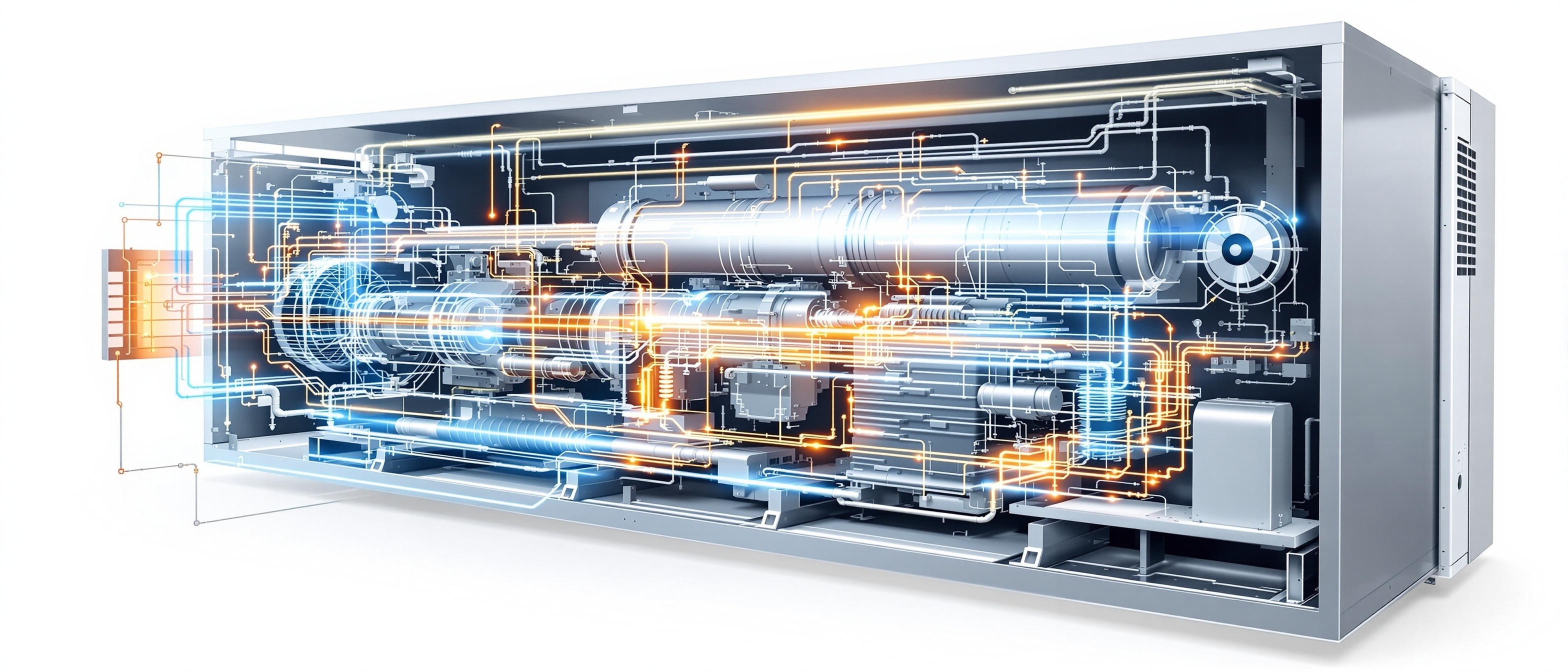
India's Bureau of Energy Efficiency (BEE) introduced the ISEER (Indian Seasonal Energy Efficiency Ratio) rating system in 2018, replacing the older EER metric. ISEER measures how efficiently an AC cools across India's varied seasonal temperatures — making it far more relevant than lab-only EER ratings.
A higher ISEER = more cooling per unit of electricity consumed. The difference between a 3-star and 5-star AC can mean ₹800–₹1,200 less on your monthly bill.
| Star Rating | ISEER Range | Est. Monthly Bill (1.5T, 8hr) | Verdict |
|---|---|---|---|
| ★☆☆☆☆ | 2.50–2.69 | ₹3,800–4,200 | Avoid |
| ★★☆☆☆ | 2.70–2.89 | ₹3,400–3,800 | Poor |
| ★★★☆☆ | 2.90–3.09 | ₹2,900–3,400 | Average |
| ★★★★☆ | 3.10–3.29 | ₹2,400–2,900 | Good |
| ★★★★★ | 3.30+ | ₹1,900–2,400 | Excellent |
Expert Tip
BEE revises star rating thresholds every 2 years. A 5-star AC bought in 2022 may only qualify as 3-star by 2026 standards. Always check the label year when comparing models.
How ISEER is Calculated
ISEER = Total Annual Cooling Output (kWh) ÷ Total Annual Energy Input (kWh). BEE tests ACs across 8 temperature bins from 24°C to 43°C, weighted by how many hours India typically experiences each temperature.
The 2026 Rating Revision
BEE raised the minimum ISEER threshold in January 2024. ACs that were 5-star in 2022 may now be rated 3-star. Always verify the label date and cross-check ISEER values on the BEE website before purchasing.
See the exact savings between star ratings
Our Savings Calculator shows your exact payback period and 5-year ROI.
Copper vs. Aluminum Coils: The Durability Debate
The hidden spec that determines your AC's lifespan
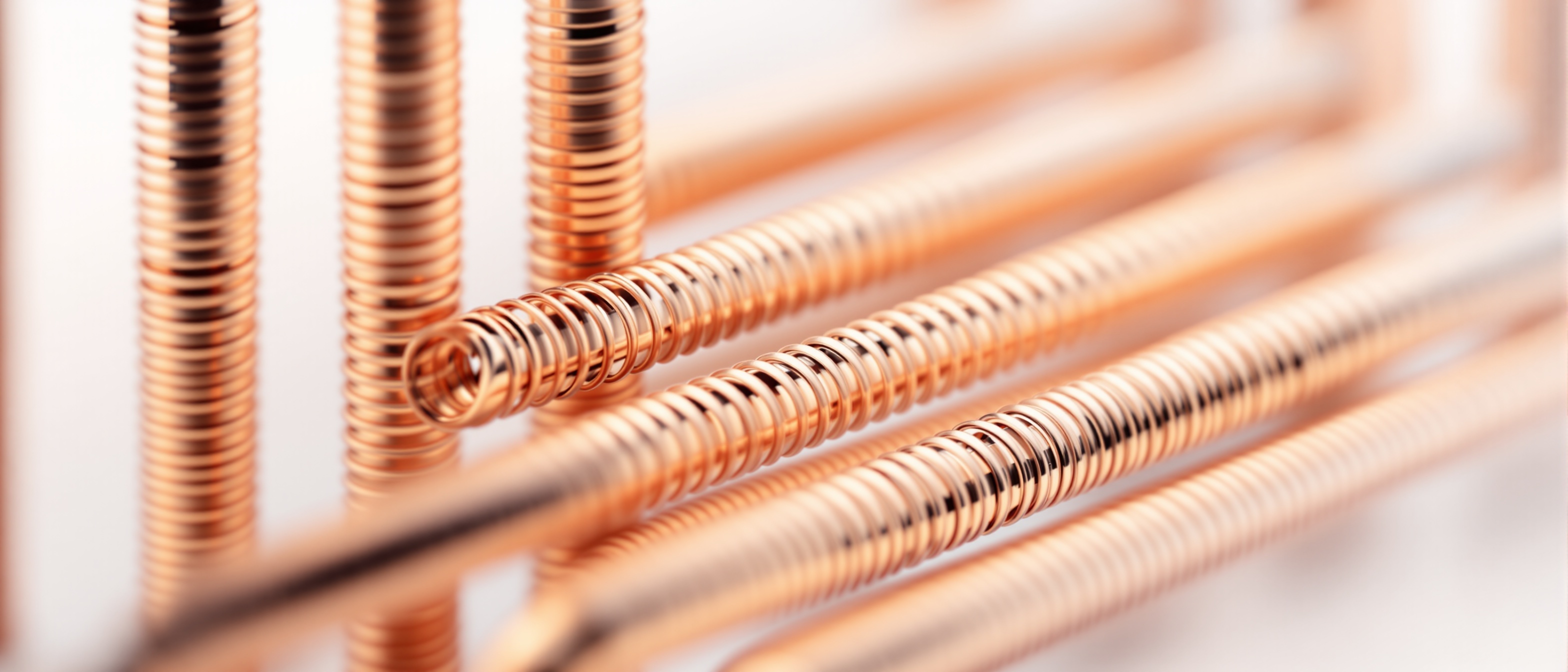
The condenser and evaporator coils are the heart of your AC. The material they're made from determines how efficiently your AC cools, how long it lasts, and how expensive repairs will be. Most budget ACs use aluminum; premium models use copper.
| Parameter | Copper Coil | Aluminum Coil |
|---|---|---|
| Heat Transfer Efficiency | Excellent (higher thermal conductivity) | Good (lower conductivity) |
| Corrosion Resistance | High (especially with Blue Fin coating) | Moderate (prone to coastal corrosion) |
| Repairability | Easy — can be brazed/welded on-site | Difficult — usually requires full replacement |
| Weight | Heavier | Lighter (easier installation) |
| Cost | 15–20% more expensive | Lower upfront cost |
| Lifespan | 12–18 years | 8–12 years |
| Ideal For | Coastal areas, long-term use | Budget buyers, dry climates |
Expert Tip
If you live within 5 km of the coast (sea, river, or lake), always choose copper coils with Blue Fin or Gold Fin anti-corrosion coating. Salt-laden air destroys aluminum coils within 3–4 years.
Common Myth
Myth: 'All copper ACs are better.' Reality: A copper-coil AC with poor fin coating in a coastal area will corrode faster than a well-coated aluminum model. The coating matters as much as the material.
Window AC vs. Split AC: The Complete Comparison
10-parameter analysis to find your perfect match
The Window vs. Split debate is one of the most common questions in Indian households. The answer depends on your room type, budget, and how much you value silence. Here's the definitive breakdown:
| Parameter | Window AC | Split AC |
|---|---|---|
| Cooling Efficiency | Moderate (EER 2.5–3.0) | High (ISEER 3.0–5.0+) |
| Noise Level | Loud (45–55 dB) | Quiet (19–38 dB) |
| Installation Cost | Low (₹500–₹1,500) | High (₹3,000–₹6,000) |
| Installation Complexity | Simple — single unit | Requires wall drilling + piping |
| Aesthetics | Bulky, blocks window light | Sleek wall-mounted unit |
| Maintenance | Easy — single unit access | Requires professional service |
| Cooling Area | Up to 150 sq ft | Up to 250+ sq ft |
| Price Range | ₹18,000–₹35,000 | ₹28,000–₹80,000+ |
| Portability | Easier to move/reinstall | Fixed installation |
| Air Distribution | Single direction | 4-way swing, wider coverage |
Want the full deep-dive with 10-year cost analysis and top product picks?
Full Comparison →Choose Window AC if...
- You have a dedicated window slot
- Budget is under ₹25,000
- Room is under 120 sq ft
- You need easy DIY maintenance
- Rental property — may need to move it
Choose Split AC if...
- You want quiet operation (bedroom/office)
- Room is 120–250 sq ft
- You want inverter technology
- Aesthetics and interior design matter
- Long-term energy savings are a priority
Choosing the Right Tonnage
Room size guide + adjustment factors
Tonnage refers to the cooling capacity of an AC — not its weight. An undersized AC runs continuously without reaching the set temperature, wasting electricity. An oversized AC cools too fast, creating humidity problems. Getting this right is critical.
| Tonnage | Room Area | Ideal For | Power Draw | Est. Monthly Bill |
|---|---|---|---|---|
| 0.75 Ton | Up to 80 sq ft | Small bedroom, study room | ~700W | ~₹1,200 |
| 1.0 Ton | 80–120 sq ft | Standard bedroom, small office | ~900W | ~₹1,600 |
| 1.5 Ton | 120–180 sq ft | Master bedroom, living room | ~1,400W | ~₹2,400 |
| 2.0 Ton | 180–240 sq ft | Large living room, hall | ~1,800W | ~₹3,100 |
| 2.5 Ton | 240–300 sq ft | Conference room, large hall | ~2,300W | ~₹3,900 |
Adjustment Factors
Sun Exposure
South/West facing rooms need +0.5 ton more capacity due to heat gain.
Floor Level
Top floor rooms absorb roof heat — add 10–15% to your base tonnage.
Occupancy
Each additional person adds ~100W heat load. Adjust for large families.
Heat Sources
Kitchens, server rooms, or rooms with many appliances need extra capacity.
Insulation Quality
Poor insulation (old buildings) requires 15–20% higher tonnage.
City Climate
Rajasthan/Gujarat summers need higher tonnage vs. hill stations.
Get your exact tonnage recommendation
Our Tonnage Calculator accounts for all 6 adjustment factors above.
Installation Tips: Get It Right the First Time
Placement, wiring, and safety essentials
A poorly installed AC loses 15–25% of its rated efficiency. Most AC problems — water leakage, high bills, frequent tripping — trace back to installation errors. Here's what to verify before the technician leaves your home:
Outdoor Unit Placement
Place the outdoor unit in a shaded, well-ventilated area. Avoid direct sunlight — it reduces efficiency by 5–10%. Ensure 30cm clearance on all sides.
Indoor Unit Height
Mount the indoor unit 7–8 feet above the floor. Too low = poor air distribution. Too high = cold air stays at ceiling level.
Pipe Length Matters
Keep copper pipe runs under 5 meters for optimal efficiency. Every extra meter reduces cooling capacity by ~1%. Avoid sharp bends.
Drain Pipe Slope
The drain pipe must slope downward at 1–2° minimum. Improper slope causes water leakage inside the room — the #1 installation complaint.
Dedicated Circuit
Never share the AC circuit with other appliances. Use a dedicated 15A/20A MCB. This prevents tripping and protects the compressor.
Earthing is Non-Negotiable
Proper earthing prevents electric shock and protects the PCB. Verify earthing continuity before powering on. Many Indian homes have faulty earthing.
AC Maintenance: The Annual Service Guide
Keep your AC running at peak efficiency for 15+ years
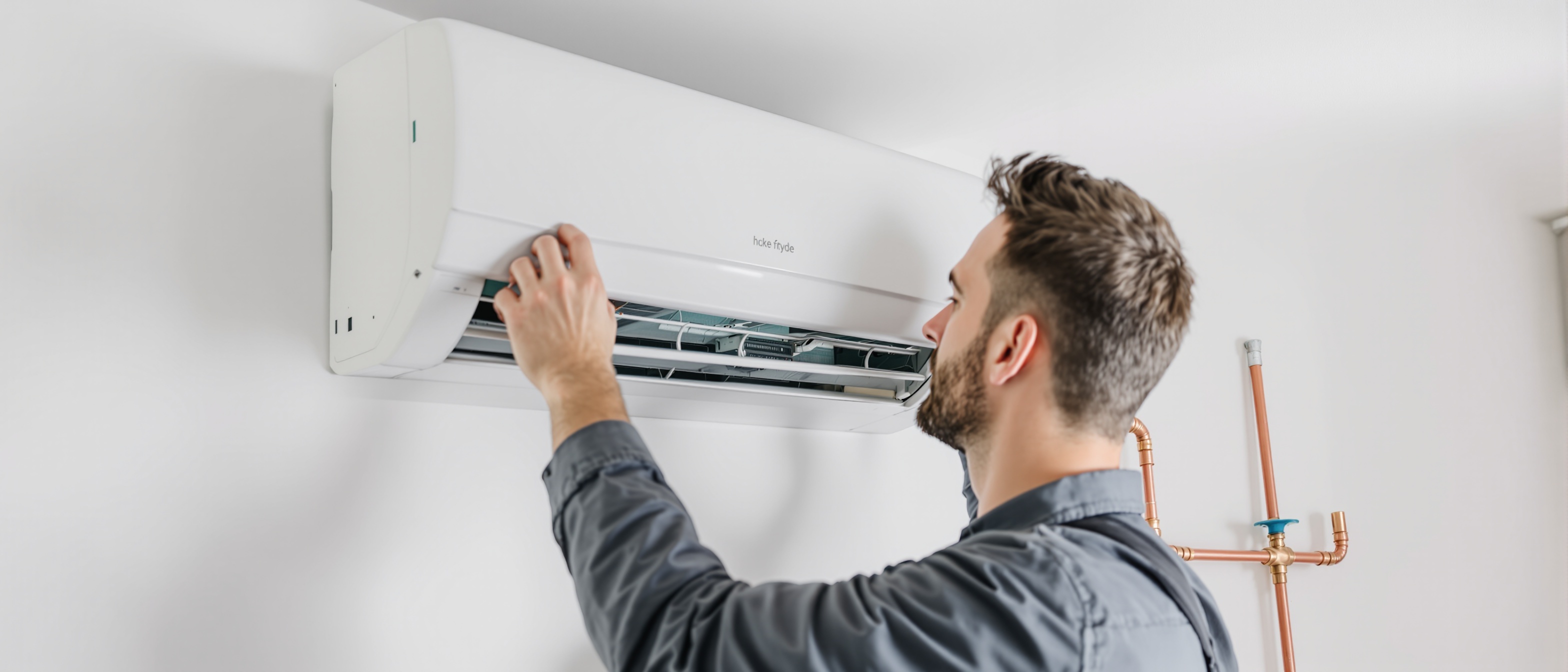
A well-maintained AC lasts 15–18 years. A neglected one fails in 6–8 years. The difference is a simple maintenance schedule that takes less than 30 minutes per month.
Clean air filter
How: Remove, rinse under tap water, dry completely before reinserting.
Maintains airflow, prevents 10–15% efficiency loss.
Check drain pipe
How: Pour a cup of water into the drain tray and verify it flows out freely.
Prevents water leakage and mold growth.
Clean outdoor unit fins
How: Gently spray water on the condenser fins to remove dust and debris.
Maintains heat rejection efficiency.
Professional service
How: Deep clean evaporator coil, check refrigerant pressure, lubricate fan motor.
Restores 95%+ of original efficiency.
Check refrigerant level
How: Only a certified technician can check and refill refrigerant safely.
Low refrigerant = poor cooling + compressor damage.
6 Things You Should Never Do With Your AC
Frequently Asked Questions
10 expert answers to India's most common AC questions
Ready to Make Your Decision?
Use our suite of precision tools to calculate your exact requirements, compare models, and verify your electrical safety before buying.
Need More Curated AC Recommendations?
Once you know what to look for, this hand-picked list of the best air conditioners is a solid next step to narrow down your shortlist.